
Why Classical Pilates Got The Breathing Wrong And What It Means for Your Pelvic Floor
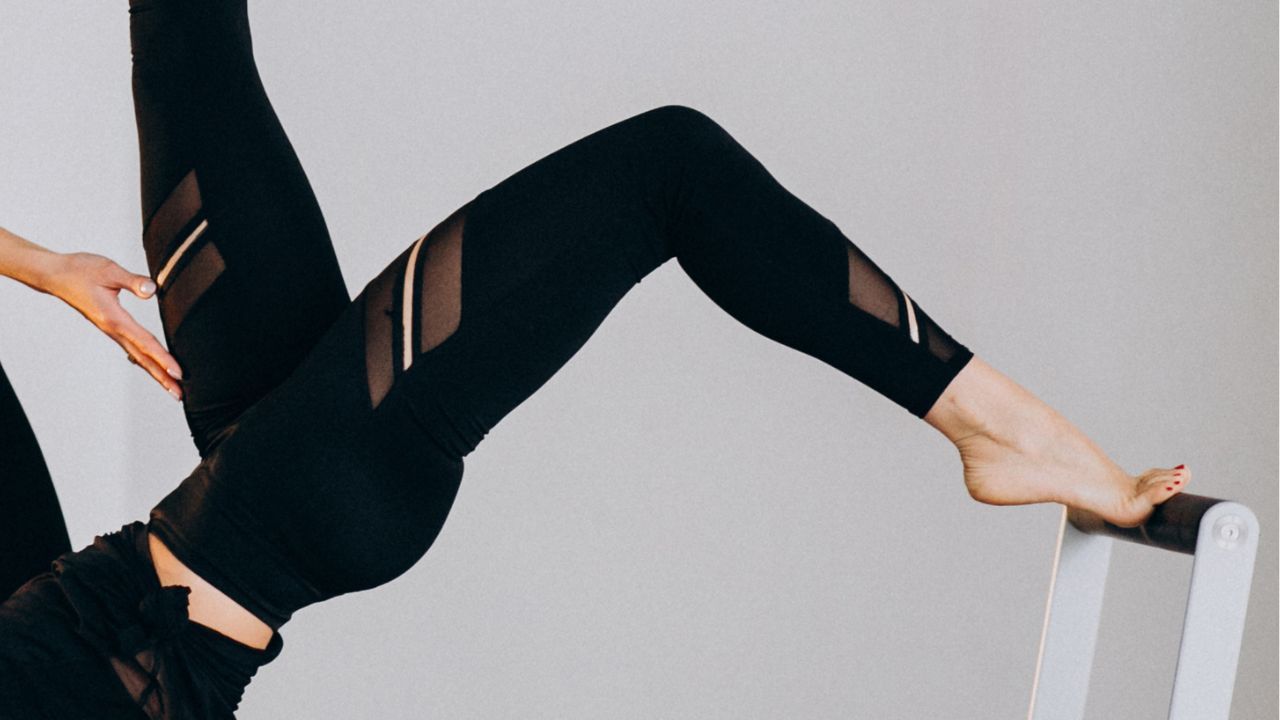
A student asked me a great question on one of my reels this week:
“Why do classical Pilates instructors teach inhale as you push out on the reformer footwork, but contemporary Pilates teaches the breath the other way around?”
It’s actually a question that changed the direction of my entire career, so I wanted to answer it properly. But to understand why the cuing differs, you first need to know a little about the divide between classical and contemporary Pilates.
Classical vs Contemporary Pilates: What’s the Difference?
Classical Pilates or “East Coast Pilates” is rooted in the original work of Joseph Pilates, who developed his method in the early 20th century. Classical teachers aim to preserve that work as closely as possible: the original exercises, the original sequence, the original cuing. It’s a purist lineage, and there are teachers who have dedicated their careers to keeping it intact.
Contemporary Pilates (otherwise known as West Coast Pilates) is a slightly more modern method well known in the physical therapy, sports medicine, and rehabilitation world, that became widespread from the 1980s onward. Teachers and researchers began asking the anatomical “why” questions and adapting the work based on evolving biomechanical research. Pelvic floor health, diastasis, breath mechanics, and intra-abdominal pressure all became part of the conversation in ways Joe never addressed.
Classical purists argue the original method is being diluted. Contemporary teachers argue the method needs to evolve with the science. I know which side I’m on, and here’s why...
My Classical Pilates Roots
My very first Pilates teacher training was actually Classical, back in 2011. I loved it at the time, but the issue I grew to have with it was that any time I asked “why do we do it this way?” the answer was always the same: “because Joseph Pilates said so.”
I needed anatomically correct answers. So I had to move on, and completed multiple other in-depth teacher trainings until I found them. The breathing question is a perfect example of why that mattered.
What Classical Pilates Teaches, And Why
Joseph Pilates taught breathing as a way to “oxygenate and energize the body.” He often cued inhale on exertion (which is the opposite of what I now teach). With reformer footwork, as the legs extend, the body “opens.” Classical teachers associate inhale with opening and extension, exhale with closing and flexion.
It’s a logical framework within its own context. The problem is, it predates what we now understand about pelvic floor mechanics.
What We Now Know About Breathing and the Pelvic Floor
From a modern pelvic floor and IAP (intra-abdominal pressure) perspective, the classical cuing is problematic for a significant portion of the population.
The exhale is when the pelvic floor and deep abdominals naturally generate intra-abdominal pressure most effectively. Cueing the exhale on the exertion (the push-out) gives the pelvic floor its best chance to manage load rather than be overwhelmed by it. This is especially important for postpartum, hypertonic, perimenopausal, and senior clients.
The same principle applies to squats. Exhaling on the way up gives the pelvic floor and deep core the best chance of managing intra-abdominal pressure. Inhaling on the way up instead would direct load and pressure downward toward the pelvic floor, which is not a safe way to lift.
Why This Matters
Poorly managed intra-abdominal pressure is a contributing factor in conditions like prolapse, diastasis, and disc issues. Something as seemingly simple as when you breathe during exercise can be part of that picture.
Classical Pilates wasn’t wrong for its time. It just hasn’t kept pace with the research. And your pelvic floor deserves better than “because Joe said so.”
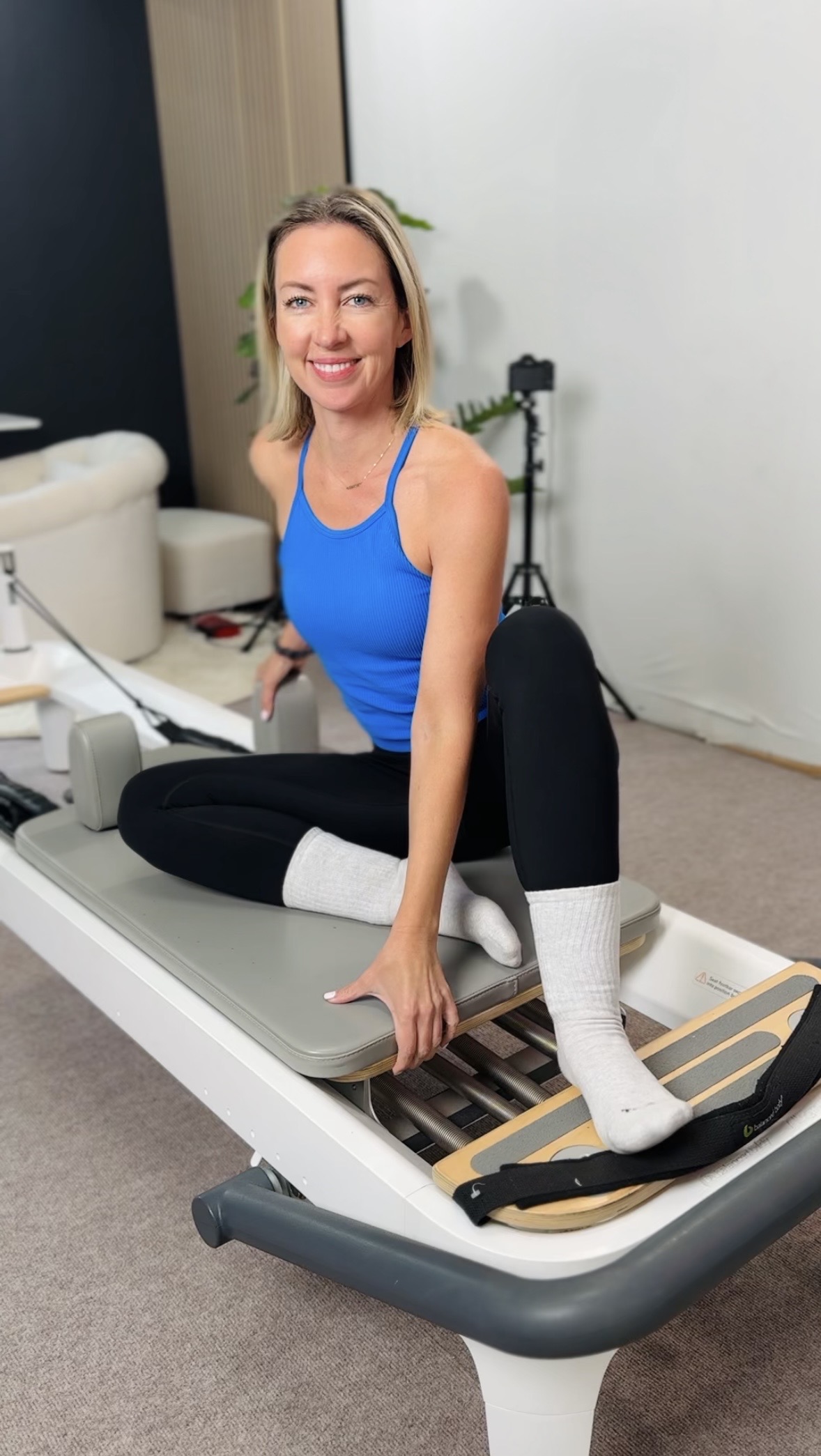
The Tight Pelvic Floor Fix - 2 weeks to retrain your hypertonic pelvic floor
The Mama Method - Postpartum pelvic floor and full body rehabilitation
The Meno Method - Perimenopause and menopause-specific pelvic floor and strength training approach
